

How many calories should I eat to gain muscle is one of the most important questions when trying to build size effectively. Building muscle isn’t just about lifting weights — it all comes down to eating enough calories. If you’ve been training consistently but still not seeing results, chances are you’re not eating in a proper calorie surplus.
Calories are a critical part of building lean muscle, but they’re only one piece — make sure your training and recovery are just as dialled in.
You can also watch the full explanation on YouTube here.
In fact, one of the biggest reasons people struggle with progress is explained in our guide on why you’re not gaining muscle despite eating enough, where we break down the most common mistakes that stop muscle growth.
In this article, we’ll show you exactly how many calories you should eat to gain muscle — and how to calculate it step by step.
What Is a Calorie Surplus?
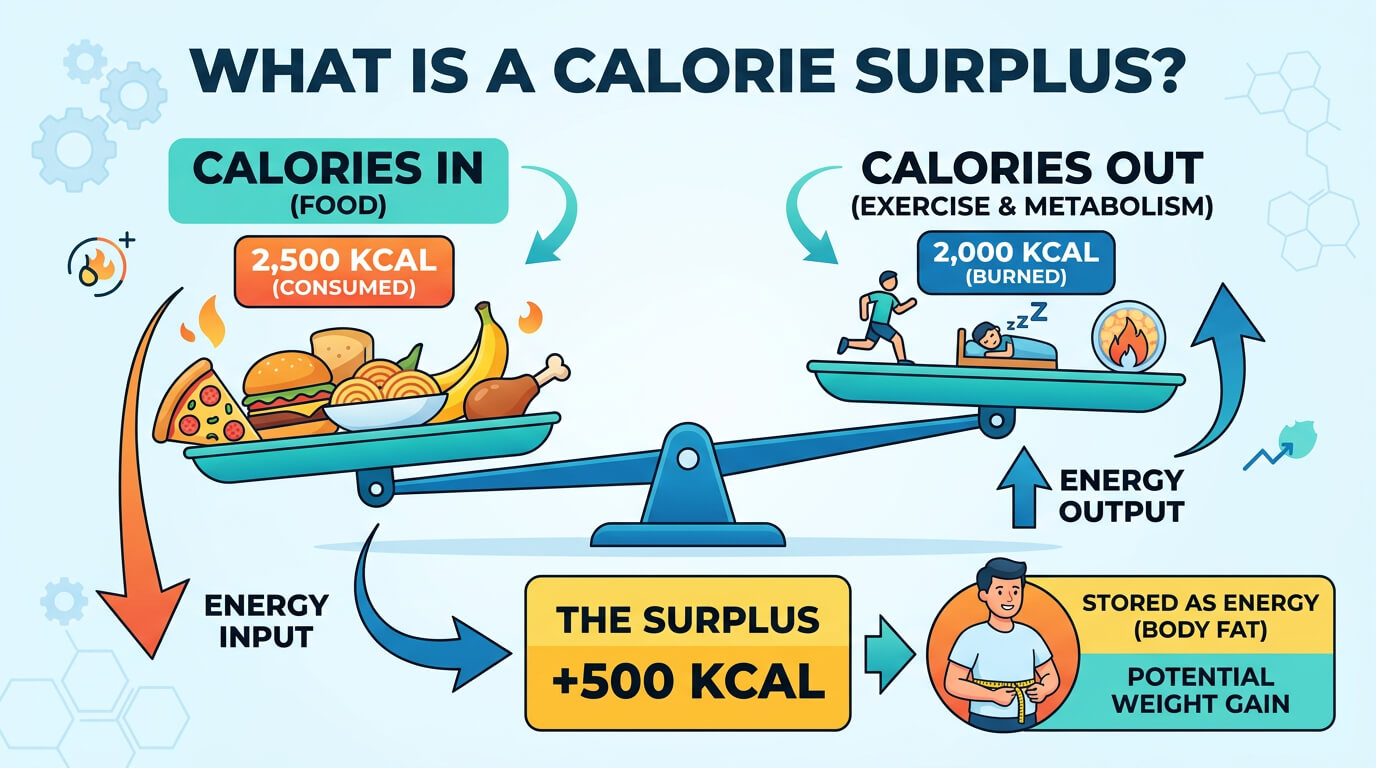
A calorie surplus simply means:
👉 Eating more calories than your body burns
Your body needs extra energy to:
- Build new muscle tissue
- Recover from workouts
- Support growth
If you’re not in a surplus, your body cannot build muscle effectively, no matter how hard you train.
Step 1: Calculate Your Maintenance Calories
Before you can gain muscle, you need to know how many calories you burn daily.
This is called your maintenance calories — the number of calories needed to maintain your current weight.
Simple method:
- Multiply your body weight (kg) by 30–35
👉 Example:
- 70kg × 30 = 2100 calories (maintenance)
Step 2: Add a Calorie Surplus
To build muscle, you need to eat above maintenance.
Recommended surplus:
- +250–500 calories per day
👉 Example:
- Maintenance: 2100
- Muscle gain calories: 2350–2600
Why not eat more? 🤔
Eating too much can lead to:
- Excess fat gain
- Slower progress
- Poor body composition
A moderate surplus is the sweet spot for lean muscle growth
Step 3: Adjust Based on Training
Your calorie needs depend on how hard you train.
If your workouts lack intensity, even the perfect calorie intake won’t help, which is why understanding training mistakes that stop muscle growth is just as important as your diet.
👉 If you’re training 4–5 times per week:
- Stick to +300–500 calories
👉 If you’re less active:
- Start with +200–300 calories
Step 4: Don’t Ignore Protein Intake
Calories matter — but protein is what actually builds muscle.
👉 Aim for:
- 1.6–2.2g of protein per kg body weight
Example:
- 70kg person → 112g–154g protein daily
If your protein intake is too low, you won’t see results — even in a calorie surplus.
This is a common issue we covered in our article on what to eat after a workout for muscle growth, where recovery nutrition plays a huge role.
To further support your muscle-building goals and ensure you’re hitting all your nutritional targets, you might also consider exploring the best supplements for muscle gain.
Step 5: Spread Calories Throughout the Day
You don’t need to eat everything at once.
Instead:
- Eat 3–5 meals per day
- Include protein in every meal
- Balance carbs and fats
Starting your day right is key, which is why adding high-protein breakfast ideas for muscle gain can make a big difference in helping you hit your daily calorie goal.
To make hitting your protein targets easier, check out these 10 high protein meals built specifically for muscle gain.
Common Mistakes That Stop Muscle Growth
Even if you think you’re eating enough, these mistakes can hold you back:
❌ 1. Guessing calories
You might THINK you’re in a surplus… but you’re not.
👉 Track your food for accuracy
❌ 2. Not eating consistently
Eating a lot one day and very little the next won’t work.
👉 Muscle growth requires consistency
❌ 3. Ignoring meal timing
Eating before and after workouts matters.
👉 Check out what to eat before a workout for muscle growth to improve performance and results.
❌ 4. Poor food quality
Calories from junk food won’t support performance or recovery.
👉 Focus on:
- Lean protein
- Whole carbs
- Healthy fats
How Fast Should You Gain Weight?
For lean muscle growth:
- Aim to gain 0.25–0.5 kg per week
👉 If you’re not gaining weight:
- Increase calories by +100–200
👉 If you’re gaining too fast:
- Reduce slightly
How This Connects to Muscle Growth
Calories are just one piece of the puzzle.
If you’re doing everything right but still not progressing, it may be due to multiple factors — including training, recovery, and nutrition — all explained in detail in our guide on why you’re not gaining muscle.
Final Thoughts
If you want to gain muscle, the formula is simple:
👉 Train hard
👉 Eat in a calorie surplus
👉 Stay consistent
Start by calculating your daily calorie intake, tracking your intake, and adjusting as needed.
Because at the end of the day, if you’re not eating enough, you’re not growing.


Join the Discussion